Every year brings a flood of technology predictions, most of them written for large corporations in the United States and Europe. Gartner’s list of strategic trends for 2027, published in October 2026, talks about world models, AI agent identity and sovereign technology. Some of that matters far beyond boardrooms; much of it does not, at least not yet. For a family in Kandy, a shop in Galle or a ten-person office in Colombo, the useful question is simpler: which changes will affect what we buy, how we stay safe and how we work over the next year? This guide picks out the trends that genuinely matter for Sri Lankan homes and small businesses, explains each in plain terms and suggests what to do about it.
Key points
- AI is moving onto phones and laptops themselves, which helps privacy and works offline, but needs newer hardware.
- A global memory shortage is pushing up prices of laptops, phones and SSDs, and analysts expect it to last into 2027.
- Passwords are giving way to passkeys, and USB-C and Qi2 are simplifying charging.
- Sri Lanka’s digital ID rollout and the Personal Data Protection Act both start to affect daily life and business in 2027.
- Ransomware reached record levels in 2026, so backups and basic security matter more than ever.
1. AI moves onto your own devices
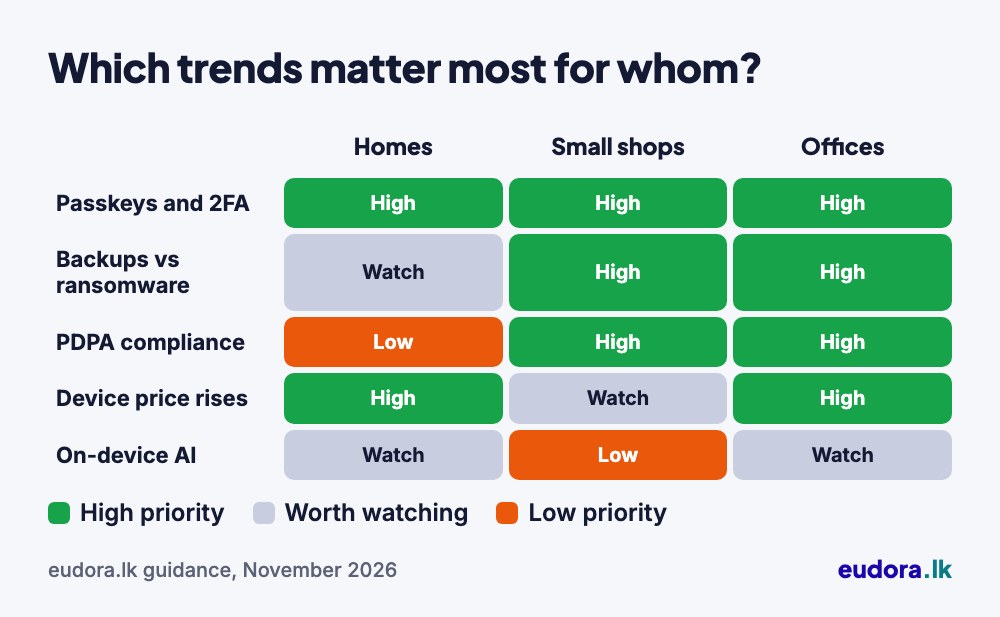
Until recently, using AI meant sending your words or photos to a server somewhere. Newer phones and laptops include dedicated AI chips, called NPUs, that run smaller AI models directly on the device. That means features such as live translation, call summaries, photo editing and note transcription can work offline and without sending personal data away. The catch is hardware: these features need recent, mid-range or premium devices with enough memory. Our guide to on-device AI on phones and laptops explains what to look for, and our article on AI PCs and NPUs covers laptops in detail.
2. Devices are getting more expensive
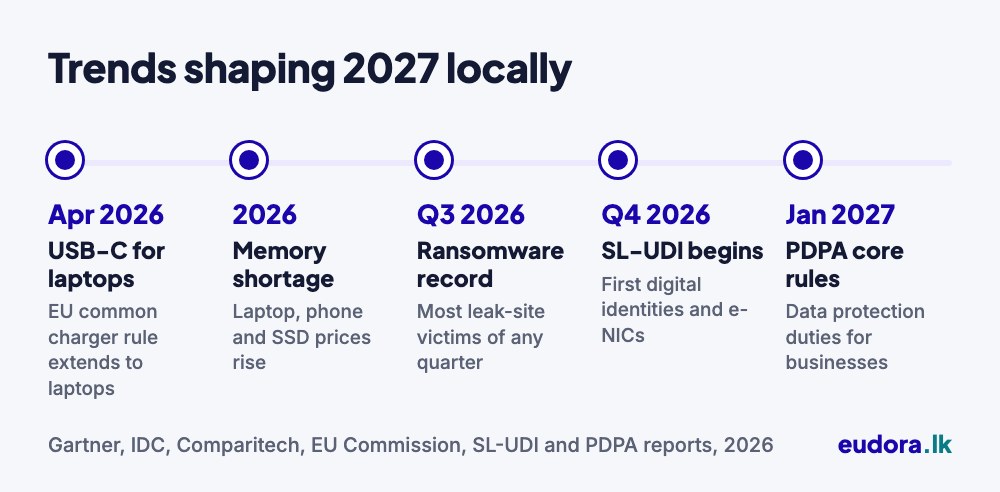
AI data centres are consuming a huge share of the world’s memory chips, and manufacturers have shifted production towards the high-end memory those data centres use. The result is a shortage of ordinary memory for PCs and phones. IDC expected average PC prices to rise by 4 to 8 percent in 2026, with major brands warning of larger increases, and the shortage is expected to last into 2027. In Sri Lanka, exchange rates and import costs add to that. If you know you will need a laptop or SSD in the next few months, buying sooner is usually sensible. Our article on why SSD and memory prices rose explains the background.
3. Passwords give way to passkeys
Passkeys let you sign in with your fingerprint, face or phone screen lock instead of a password, and they cannot be stolen by fake login pages. Google, Apple, Microsoft, WhatsApp and many shopping and banking services now support them. Moving your main accounts to passkeys is one of the most effective security steps you can take in 2027. Our passkeys guide shows how, and our two-factor authentication guide covers accounts that do not support passkeys yet.
4. One charger for everything
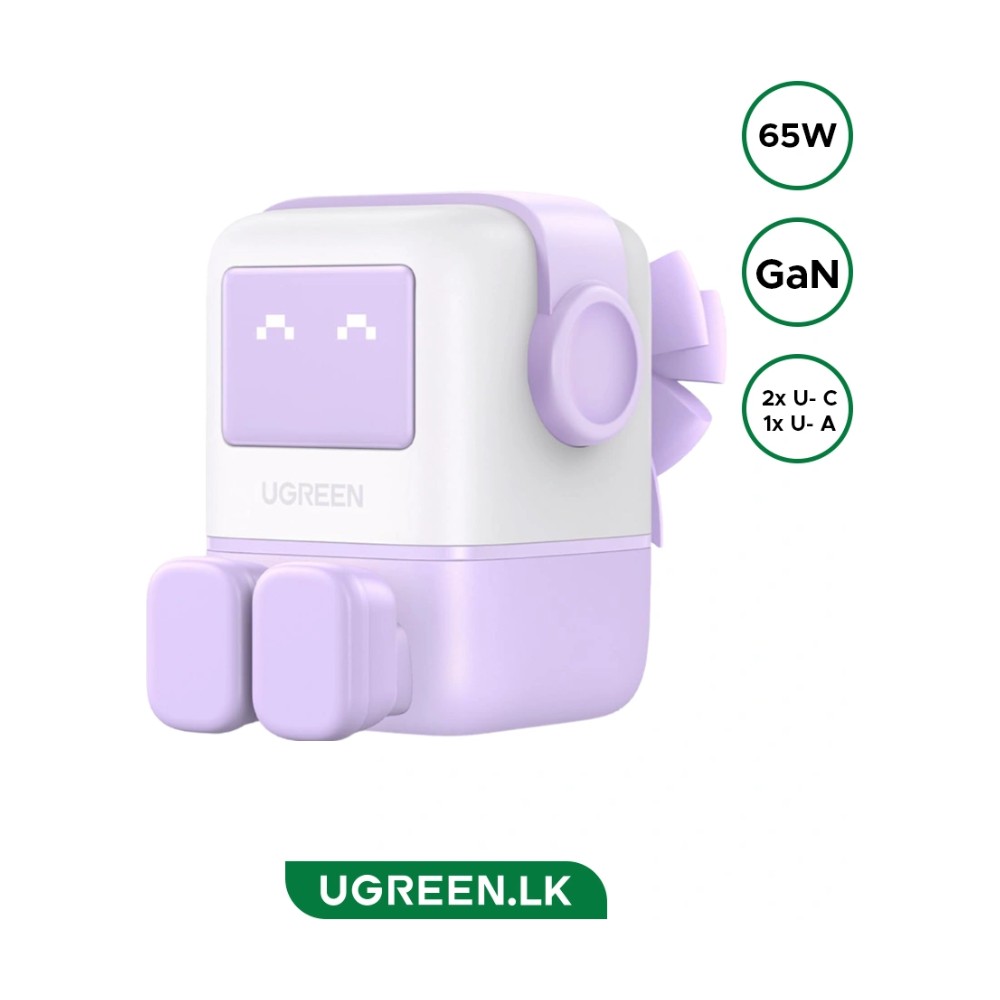
Since 28 April 2026, new laptops sold in the European Union must charge over USB-C, following the same rule for phones, tablets and cameras. Because manufacturers design for global markets, the change reaches Sri Lankan shops too: nearly every new laptop, phone and accessory now charges from the same kind of port. At the same time, the Qi2 standard is making magnetic wireless charging faster and more common on Android phones as well as iPhones. A single multi-port GaN charger such as the UGREEN Uno 65W at Rs 11,000 can now charge a laptop and phone together. Our guides to the universal USB-C charger and Qi2 wireless charging explain what to buy.
5. A national digital identity
Sri Lanka’s Unique Digital Identity programme, SL-UDI, is moving from planning to rollout, with first digital identities and new e-NICs expected from the final quarter of 2026, starting with young people receiving their first identity cards. Over the following years it should make it easier to prove who you are online for banking, government services and business. It will also attract scammers pretending to help people register. Our guide to SL-UDI and the digital ID explains what to expect and how to stay safe.
6. Ransomware keeps breaking records
Ransomware groups listed more victims on their leak sites in the third quarter of 2026 than in any previous quarter, according to several trackers; Comparitech counted 2,627 attacks, close to 29 a day. Small businesses make up a large share of victims, because they often lack backups and security monitoring. The defences are not new, but they are more important than ever: tested backups kept separately from the office network, updated software, two-factor authentication and staff who recognise phishing. Our guide to managed cloud backup covers the most important one.
7. Data protection becomes real
The core rules of Sri Lanka’s Personal Data Protection Act are expected to apply from 1 January 2027. Every business that keeps customer names, phone numbers, CCTV footage or staff records will need to know what it holds, protect it, and handle it fairly. Our guide to the PDPA’s 2027 start and our article on cloud data and the PDPA explain the practical steps.
8. Smaller, quieter computers and better screens
Desktop computers are shrinking. Mini PCs the size of a book now match many towers for office work while using far less electricity, which matters with rising tariffs. Laptops with OLED screens, once a premium feature, are spreading to mid-range models, and office monitors with 100Hz to 144Hz refresh rates now cost little more than older 60Hz screens. Our guides to mini PCs, OLED laptops and high-refresh office monitors cover each.

9. Your own private cloud
Subscription prices for cloud storage and apps have risen, and many are billed in US dollars. Personal and small-office NAS devices, which act like a private cloud for photos, files and backups with no monthly fee, have become much easier to use. They suit families and small offices with large photo or file collections. Our comparison of a home NAS versus cloud subscriptions sets out the costs.
What the big trend lists mean for you
Gartner’s 2027 list includes ideas such as AI agents that act on your behalf, the identity and security of those agents, and digital sovereignty, meaning control over where data and technology come from. For most local businesses, these translate into practical questions: which AI tools are staff using, what can those tools access, and where does customer data end up? Answering them now is better than reacting later. Our guide to AI privacy settings is a good starting point.
The trends at a glance
| Trend | What changes | What to do |
|---|---|---|
| On-device AI | Phones and laptops run AI features locally | Consider it at your next upgrade; check memory and NPU |
| Memory shortage | Higher prices for laptops, phones and SSDs | Buy planned equipment early; upgrade storage where possible |
| Passkeys | Sign in without passwords | Add passkeys to email, WhatsApp and key accounts |
| USB-C and Qi2 | One charger standard for laptops and phones | Standardise chargers and cables |
| SL-UDI digital ID | Digital identity and new e-NICs | Use only official channels; beware of registration scams |
| Ransomware | Record attack levels | Tested, separate backups and two-factor authentication |
| PDPA | Data protection duties from January 2027 | Map customer data and secure it |
Most of these trends point in the same direction: keep devices current, protect accounts and data, and plan purchases rather than reacting to a sudden failure or price jump. None needs a large budget; most need a few hours of attention spread across the year.
A simple 2027 checklist
- Security: passkeys or two-factor authentication on email, WhatsApp and banking; tested backups for business data.
- Buying: plan necessary laptop, phone and SSD purchases early, while prices are still moving up.
- Charging: standardise on USB-C chargers and cables; consider Qi2 for phones.
- Data: list where customer data lives before the PDPA’s core rules apply.
- Staff: agree which AI tools may be used for work and what may be pasted into them.
Our team can help with any of these, from setting up passkeys and backups to choosing new hardware; see our IT support services or ask about our monthly IT support plan at Rs 9,900.
-
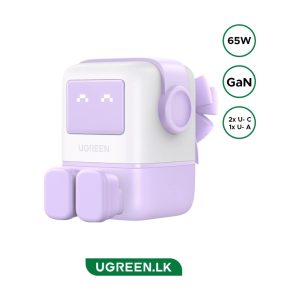 UGREEN
 Uno 65W 3-Port GaN Charger – 2× USB-C, 1× USB-A, UK Plug
Rs 11,000 Add to cart -
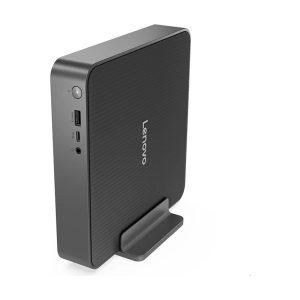 Lenovo
 IdeaCentre Mini 01IRH10R Mini PC – Core 7 240H, 8GB, 512GB SSD
Rs 280,000 Add to cart -
 ASUS
ASUS Zenbook 14 OLED UX3405CA Laptop – Core Ultra 5 225H, 16GB, 1TB SSD
Rs 486,000 Add to cart -
 UGREEN
 NASync DH2300 2-Bay NAS – Personal Cloud Storage (Diskless)
Rs 88,500 Add to cart
Frequently asked questions
Will laptop prices keep rising in 2027?
Analysts expect the memory shortage to continue into 2027, so prices are unlikely to fall soon. Buy what you need rather than waiting.
Do I need an AI laptop or phone?
Not yet for most people. On-device AI is useful but optional; buy for battery, screen and performance first.
Should I switch to passkeys?
Yes, for important accounts that support them. They are easier and much harder to phish than passwords.
When will the digital ID affect me?
The rollout starts from late 2026 and expands over several years, with existing NICs valid during the transition.
What is the single most important step for a small business?
Tested backups kept away from the office network, followed by two-factor authentication on email.

Eudora Technology is a Kandy-based team working on CCTV, networks, IT support, cloud and websites for homes and businesses across Sri Lanka.