Why SSD and Memory Prices Rose in 2026, and When to Buy
AI data centres are buying up memory chips, pushing SSD and RAM prices up through 2026. What is happening, how it affects Sri Lankan buyers, and how to buy sensibly.
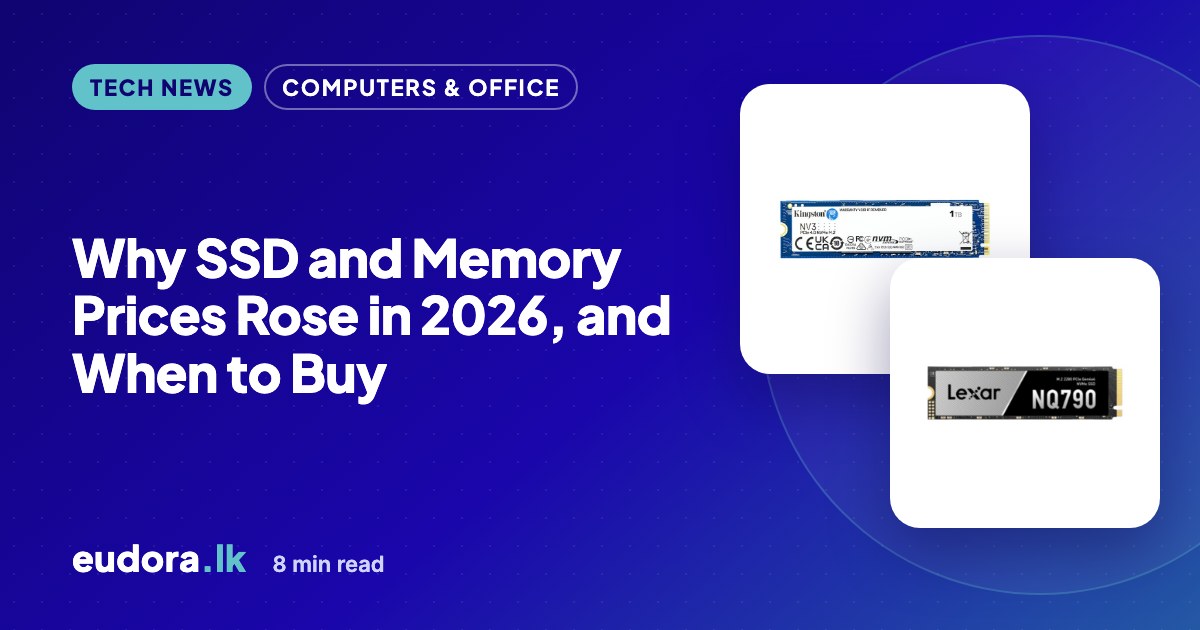
If you have priced an SSD or a memory upgrade this year and thought it cost more than last time, you were right. Through 2025 and 2026, the big memory chip makers shifted production towards the high-bandwidth memory and enterprise SSDs that AI data centres need, and prices for ordinary PC memory and storage rose with them. Market researcher TrendForce expected contract prices to keep climbing into the last quarter of 2026. This post explains what is driving the change, how it reaches shop prices in Sri Lanka, and how to plan a storage purchase without overpaying.
Key points
- AI servers need huge amounts of memory, and chip makers have prioritised them over consumer parts.
- TrendForce forecast DRAM contract prices up 10 to 15% and NAND flash up 15 to 20% quarter on quarter in Q4 2026.
- Some laptop makers responded by shipping smaller SSDs as standard, so check the storage on any new laptop carefully.
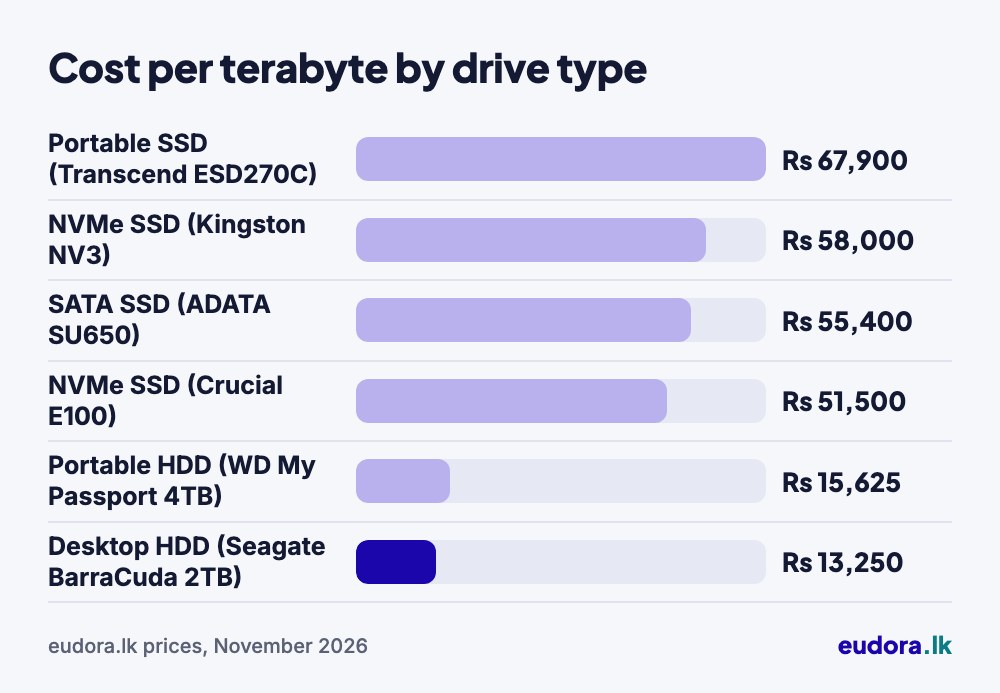
- Hard drives still cost far less per terabyte: a 1TB NVMe SSD costs about 3.9 times as much per terabyte as a 2TB desktop hard drive in our catalogue.
Why memory got expensive
Two kinds of memory chip go into almost every computer. DRAM is the working memory (RAM) that holds what you are doing right now. NAND flash stores data permanently and is what SSDs, memory cards and USB drives are made of. A small number of companies, including Samsung, SK hynix, Micron, Kioxia and Western Digital’s flash business, make most of the world’s supply.
AI changed the demand. Each AI server uses many times more memory than an ordinary server, including a special stacked type called high-bandwidth memory (HBM) that is complicated to make. Cloud companies have been building AI data centres at record pace and signing large supply contracts. Memory makers earn more from those products, so they have moved factory capacity towards them. With less capacity left for ordinary PC and phone memory, prices for those parts rose too.
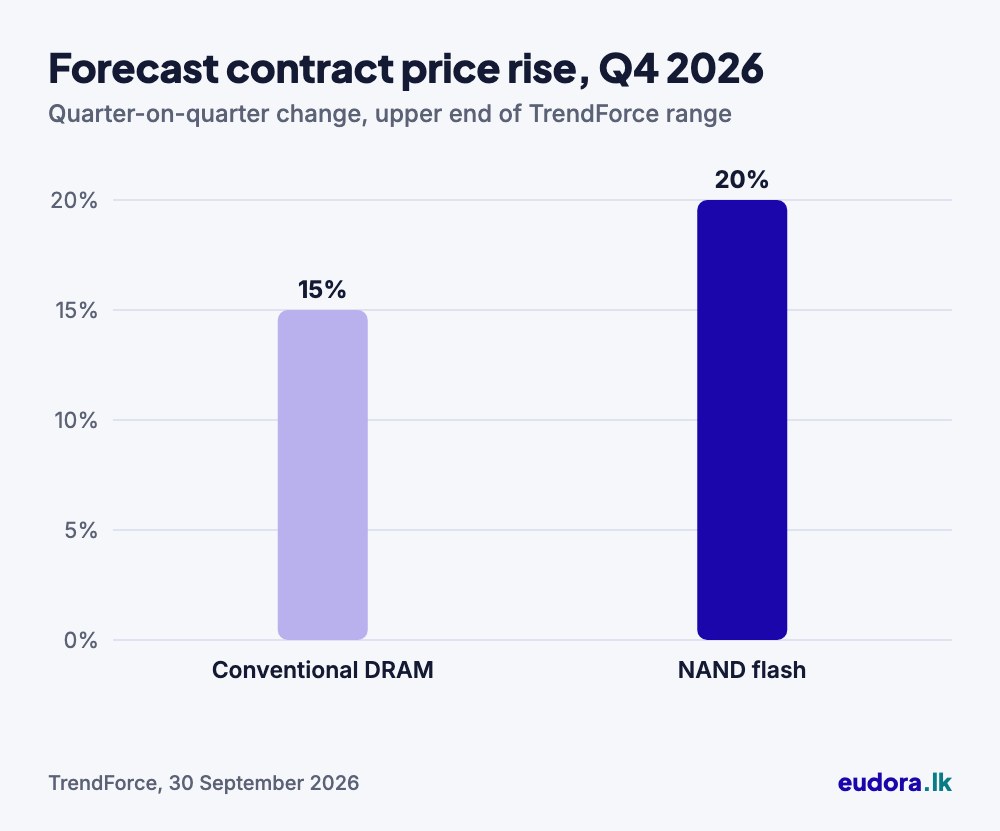
TrendForce, which tracks contract prices between chip makers and large buyers, forecast in September 2026 that conventional DRAM contract prices would rise 10 to 15% in the fourth quarter compared with the third, and NAND flash contract prices 15 to 20%. It noted that AI infrastructure, not consumer demand, was driving the increases; demand for consumer electronics was actually weak. Earlier in the year it had forecast client SSD contract prices rising by at least 40% in the first quarter of 2026 alone.
How it reaches shop prices in Sri Lanka
Contract prices are what PC makers and large distributors pay. Shop prices follow them, but with a delay of weeks or months, and with other factors mixed in: the rupee exchange rate, shipping costs, import duties, and how much old stock distributors are holding. That is why local prices do not move in neat steps. When we updated our catalogue to market median prices in November 2026, some storage products had risen and others had fallen slightly, as distributors cleared older stock.
The pattern to expect is uneven but upward pressure on SSDs and RAM through the end of 2026, with the biggest effect on the newest and fastest parts and on high capacities. Hard drives are made differently and have been less affected, although high-capacity drives for data centres are also in demand.
Phones, tablets and game consoles use the same memory chips, so their makers face the same pressure. Some respond by raising prices at launch, others by keeping last year’s storage sizes for longer. If you are comparing a new phone or tablet, look at the storage and memory figures as closely as the camera and screen, because they decide how long the device stays comfortable to use.
Cost per terabyte today
The fairest way to compare storage is cost per terabyte. The chart below uses our current prices.
| Drive | Type | Price | Per terabyte |
|---|---|---|---|
| Crucial E100 1TB | NVMe SSD (PCIe 4.0) | Rs 51,500 | Rs 51,500 |
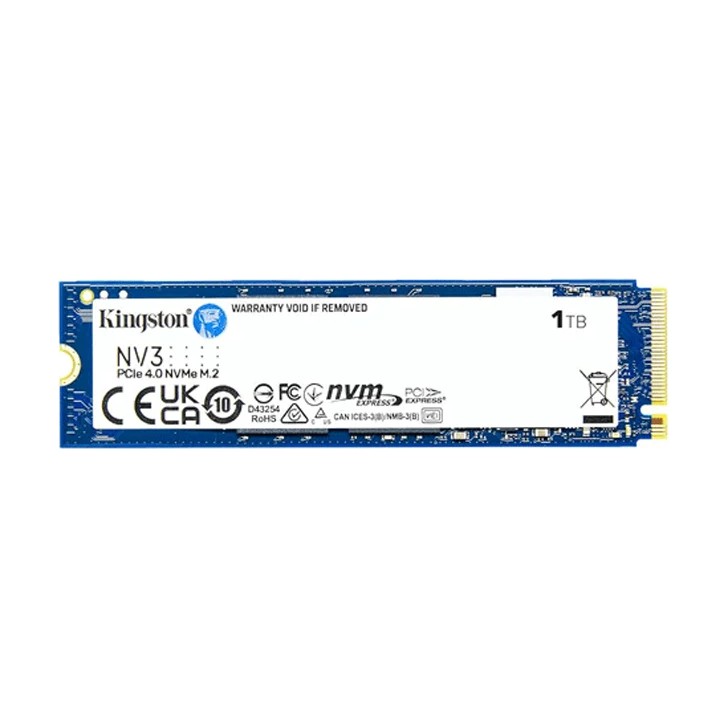
| Kingston NV3 1TB | NVMe SSD (PCIe 4.0) | Rs 58,000 | Rs 58,000 |
| ADATA SU650 512GB | SATA SSD | Rs 27,700 | Rs 55,400 |
| Transcend ESD270C 1TB | Portable SSD | Rs 67,900 | Rs 67,900 |
| WD My Passport 4TB | Portable hard drive | Rs 62,500 | Rs 15,625 |
| Seagate BarraCuda 2TB | Desktop hard drive | Rs 26,500 | Rs 13,250 |
SSDs cost several times more per terabyte than hard drives, and that gap widened in 2026. For the drive your operating system and programs run from, an SSD is still essential: the speed difference is enormous. For storing large amounts of photos, videos and backups, a hard drive remains the economical choice.
What this means for new laptops and PCs
PC makers face the same higher costs, and some have chosen to keep prices steady by fitting less memory or storage. Taiwan’s Commercial Times reported in 2026 that several laptop makers planned smaller default SSD capacities. In practice you may see models that used to come with 512GB now offered with 256GB at the same price, or 8GB of RAM where 16GB was expected.
- Check the SSD size and whether a second M.2 slot is free for later expansion.
- Check whether RAM is soldered or in slots. Soldered memory cannot be upgraded.
- Compare the full specification, not just the processor and price.
- Ask about warranty for the SSD as well as the laptop.
Our laptop buying guide explains how much storage and memory different users need. For most office and family laptops, 512GB of SSD and 16GB of RAM is the sensible target in 2026.
RAM upgrades, memory cards and USB drives
The same forces affect RAM sticks for desktops and laptops. If your laptop has a free memory slot, adding a second module is still one of the most cost-effective ways to make Windows 11 feel smoother, especially going from 8GB to 16GB. Match the type and speed of the memory already fitted, which you can see in Task Manager under Performance, Memory, or ask us to check before buying.
Memory cards and USB flash drives use the same NAND flash as SSDs, so their prices are under similar pressure, though the effect is smaller in rupee terms because the cards themselves are inexpensive. For CCTV cameras and dashcams, choose cards designed for continuous recording rather than the lowest price, because a card that fails silently loses exactly the footage you need. Our guide to CCTV storage explains how much recording time different sizes give.
Graphics cards are affected too, because they use fast memory chips, but that matters mainly to gamers and video editors rather than to typical office users.
Should you buy now or wait?
Nobody can time a market reliably, and we will not pretend to. The practical answer depends on why you are buying.
| Situation | Suggestion |
|---|---|
| Your PC is slow because it still has a hard drive | Buy an SSD now. The speed gain is worth more than any likely price change. |
| Your drive is nearly full or showing errors | Buy now and copy your data before it fails. |
| You want more space for photos and videos | Consider a large external hard drive instead of a bigger SSD. |
| You are building a new PC with no deadline | Watch prices for a few weeks, but do not wait months for a fall that may not come. |
| A business needs several machines | Buy the storage you need for the next two to three years now rather than upgrading later. |
Watch out: When prices rise, cheap unbranded SSDs and memory cards with fake capacities appear online. Buy recognised brands from sellers who give a real warranty.
Making the most of the storage you have
Before buying, it is worth checking whether you need more space at all. Windows Storage Sense can clear temporary files automatically, and moving old photos and videos to an external drive often frees a large share of a laptop’s SSD. Cloud storage that comes with a Microsoft 365 or Google account can hold documents you rarely open.
-
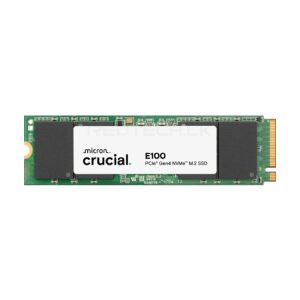 Crucial
 E100 1TB M.2 NVMe SSD – PCIe 4.0
Rs 51,500 Add to cart -
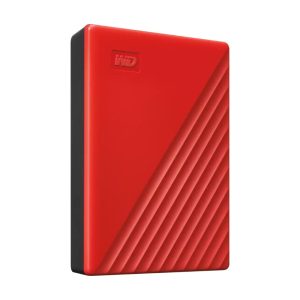 Western Digital
WD My Passport 4TB Portable Hard Drive – USB 3.2, Hardware Encryption
Rs 62,500 Add to cart -
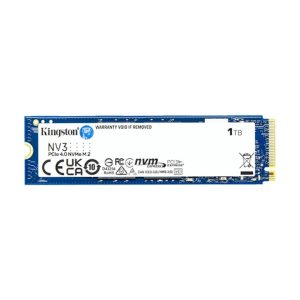 Kingston
 NV3 1TB M.2 NVMe SSD – PCIe 4.0, up to 6,000MB/s
Rs 58,000 Add to cart -
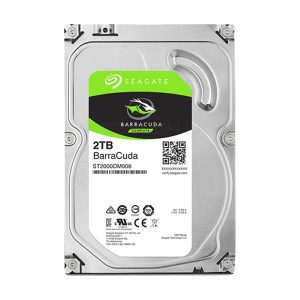 Seagate
 BarraCuda 2TB 3.5-inch Desktop Hard Drive – 7200 RPM
Rs 26,500 Add to cart
For backups, the most economical reliable approach is still a hard drive kept separate from the computer, plus a cloud copy for the most important files. Our 3-2-1 backup guide explains the idea, and our comparison of SSDs and hard drives covers lifespan and reliability. If you want us to fit an SSD and move your Windows installation across, our IT support team can do it the same day in Kandy, and we can advise on storage and backup for small offices.
Frequently asked questions
Why are SSD prices going up when technology usually gets cheaper?
Memory chip makers have moved production towards AI servers, which pay more, so less capacity is left for consumer SSDs and RAM. Prices follow supply and demand rather than technology alone.
Will SSD prices fall again?
Memory prices move in cycles and have fallen sharply in the past. When this cycle turns depends on AI demand and new factory capacity, which no one can predict precisely.
Is a hard drive still worth buying in 2026?
For storing large files and backups, yes. Hard drives cost several times less per terabyte. For running Windows and programs, use an SSD.
Is it worth upgrading an old laptop’s hard drive to an SSD now?
Yes, if the laptop can run Windows 11 or you will keep using it. The speed improvement is large and an SSD costs far less than a new laptop.
How can I tell a fake SSD or memory card?
Buy known brands from sellers with a proper warranty, be wary of prices far below the market, and test capacity with a free tool after purchase.

Eudora Technology is a Kandy-based team working on CCTV, networks, IT support, cloud and websites for homes and businesses across Sri Lanka.