One Charger for Everything: USB-C Is Now the Standard for Phones and Laptops
USB-C charging now covers new laptops as well as phones and tablets. What the change means, how USB Power Delivery works, and how to choose chargers and cables.
Drawers full of old chargers are a familiar sight in Sri Lankan homes and offices: round barrel plugs for laptops, micro-USB for old phones, Lightning for iPhones, and a different brick for every device. That era is ending. USB-C has become the common charging port for phones, tablets, cameras, earbuds and, since 2026, laptops. A European Union law made it mandatory for new devices sold there, and because manufacturers build for the world market, the same devices arrive in shops here. The promise is simple: one good charger and one cable can power most of your devices. The reality has a few details worth knowing, because not every USB-C charger or cable is the same. This guide explains what has changed, how USB-C charging works, and how to pick chargers and cables that work for everything you own.
Key points
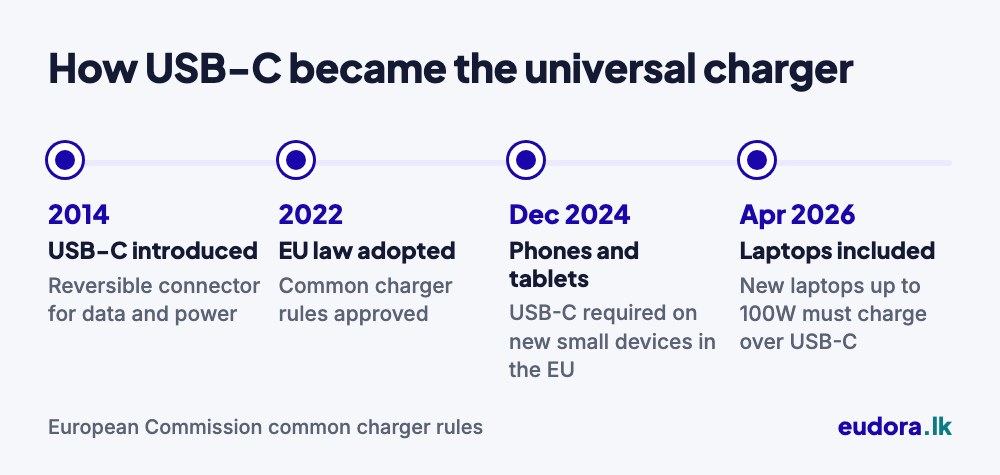
- New phones, tablets and cameras sold in the EU have had to charge over USB-C since December 2024, and laptops since 28 April 2026.
- USB Power Delivery lets one charger safely supply the right power to a phone, tablet or laptop.
- Charger wattage decides what it can charge quickly; 65W covers most thin laptops and phones together.
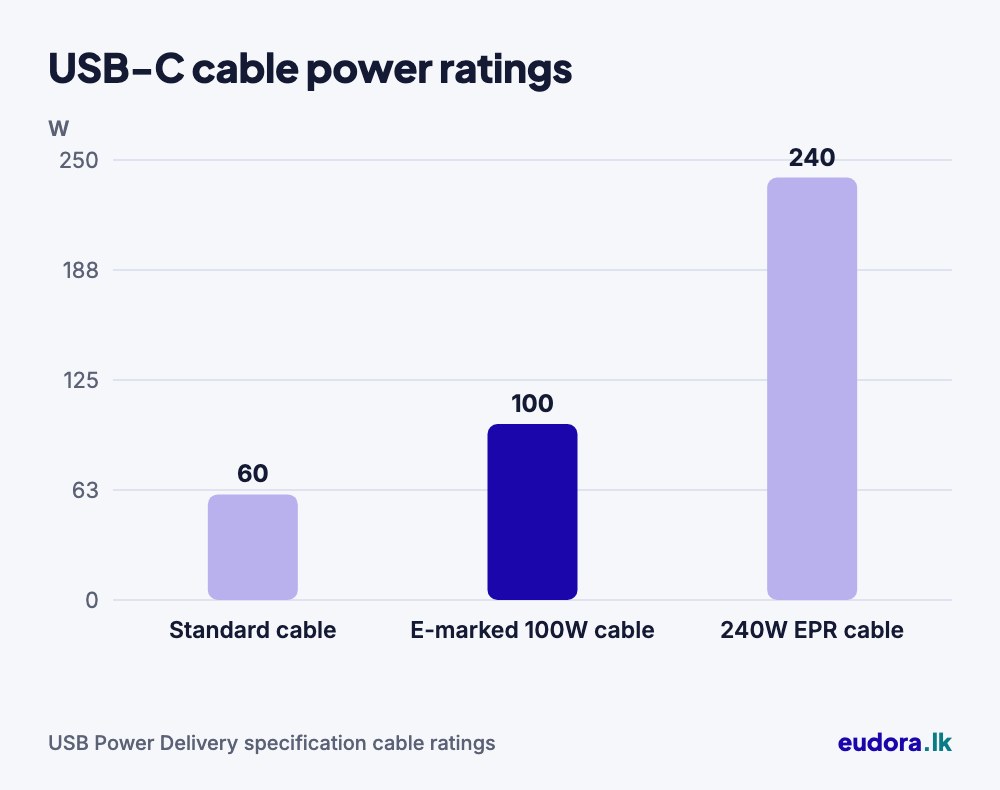
- Cables are rated for power: 60W cables suit phones and small laptops, while 100W or 240W cables suit larger laptops.
- Many new devices may come without a charger in the box, so reusing a good one saves money and waste.
What changed, and why it reaches Sri Lanka
The European Union’s common charger rules require USB-C charging on new phones, tablets, cameras, headphones, portable speakers, handheld game consoles, e-readers, keyboards, mice and similar devices since 28 December 2024. From 28 April 2026, the rule extended to laptops with power needs up to 100W. Manufacturers must also offer buyers the option of purchasing a device without a charger. Sri Lanka has no equivalent law, but global brands design one model for many markets, so the laptops and phones sold here follow the same design. The result is that nearly every new device in our catalogue charges over USB-C.
How USB-C charging works
USB-C is the shape of the connector; USB Power Delivery (USB PD) is the system that decides how much power flows through it. When you connect a device, the charger and device agree on a voltage and current. A phone might take 9 volts for fast charging, while a laptop asks for 20 volts. A good USB PD charger can therefore charge earbuds at a few watts and a laptop at 65W or more, safely, from the same port. Standard USB PD goes up to 100W, and the newer extended power range allows up to 240W for larger laptops and monitors with the right charger and cable.
| Device | Typical charging power over USB-C | Charger that suits it |
|---|---|---|
| Earbuds, watch | Under 10W | Any USB-C charger |
| Smartphone | 18W to 45W | 20W to 30W for most phones |
| Tablet | 20W to 45W | 30W |
| Thin laptop | 45W to 65W | 65W |
| Larger or performance laptop | 65W to 100W | 100W, or the maker’s charger |
| Gaming laptop | Often more than 100W | Usually the maker’s own charger; USB-C may charge slowly |
Our guide to GaN USB-C chargers explains why newer chargers are smaller and cooler, and our article on Qi2 wireless charging covers the wireless side.
Choosing one charger for several devices
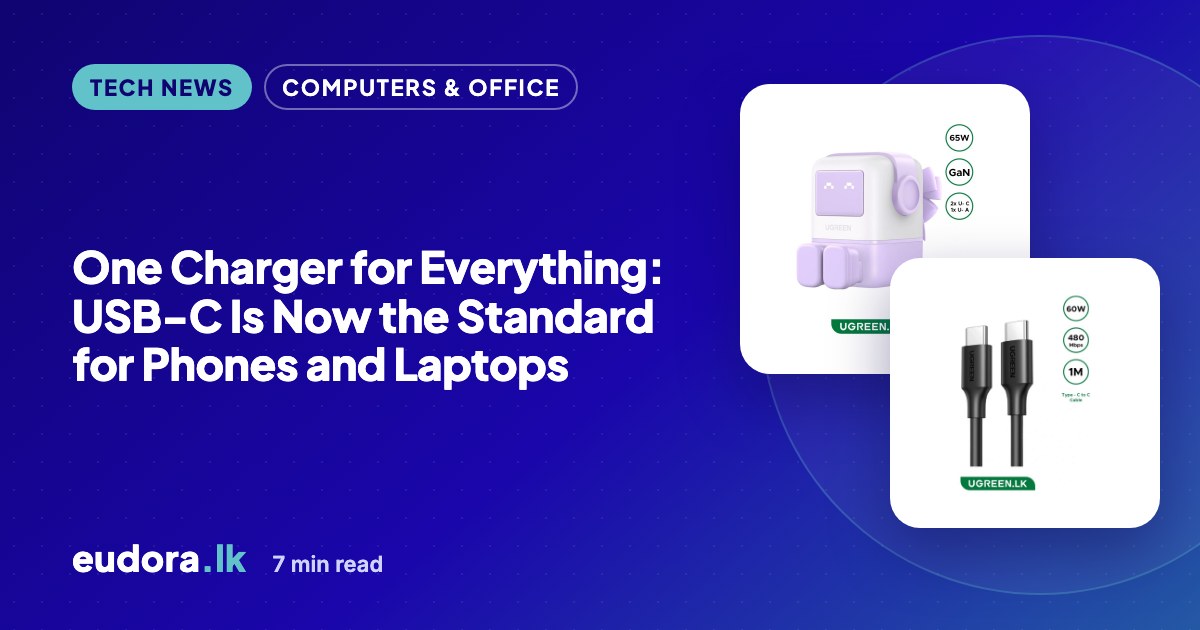
A multi-port GaN charger is the most practical way to take advantage of USB-C. The UGREEN Uno 65W at Rs 11,000 has two USB-C ports and one USB-A, enough to charge a thin laptop and a phone at the same time. When several devices share one charger, the power is divided between ports, so check how the charger splits its output; a 65W charger may give a laptop 45W when a phone is also connected. For a phone alone, the UGREEN 20W charger at Rs 4,200 or the 30W GaN model at Rs 5,200 is plenty.

Tip: Before buying a laptop that ships without a charger, check its required wattage in the specifications and make sure your existing USB-C charger meets it. A lower-wattage charger will usually still work, just more slowly, and may not keep up while the laptop is working hard.
Cables matter more than they look
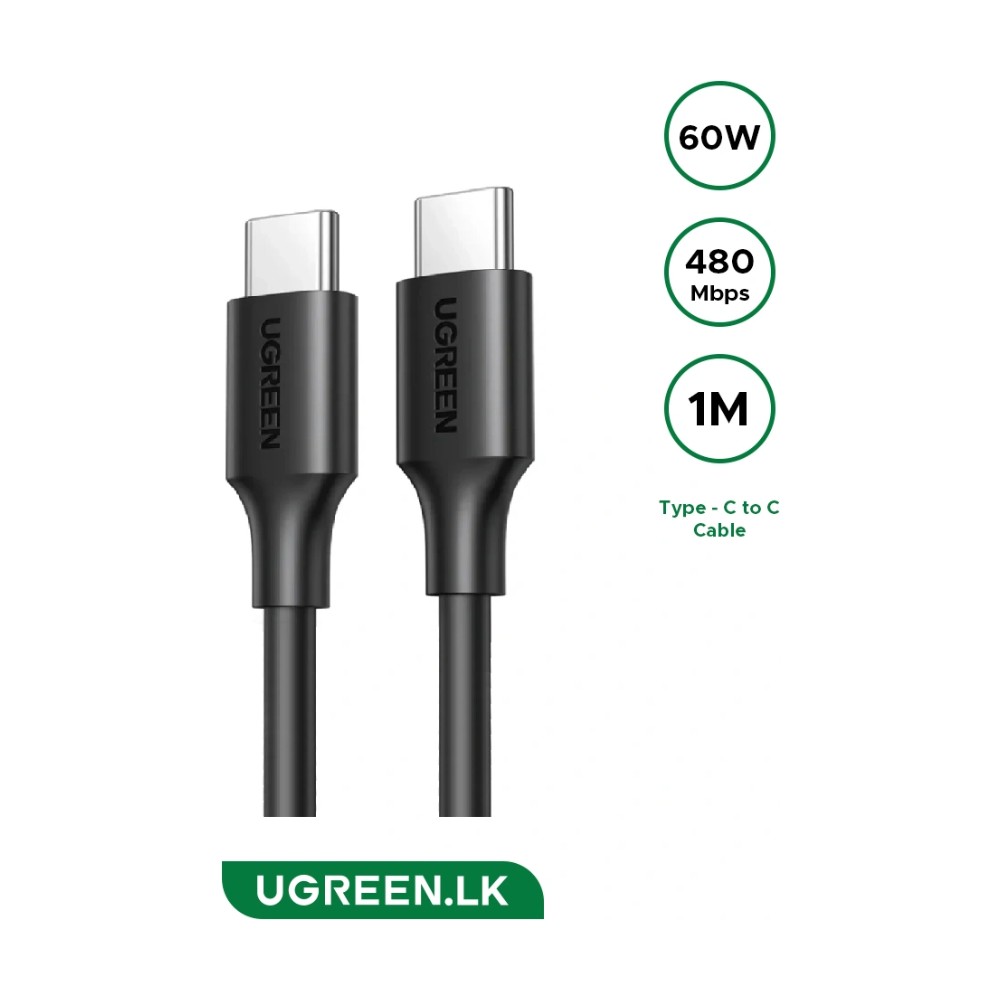
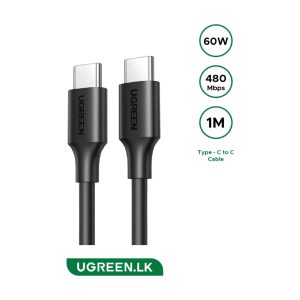
USB-C cables look identical but vary enormously. Some carry only USB 2.0 data and 60W of power; others carry 100W or 240W and 10, 20, 40 or even 80 gigabits per second of data for displays and fast drives. A 60W cable is fine for phones, tablets and many thin laptops. Laptops drawing more than 60W need a cable with an electronic marker chip rated for 100W or 240W. Good cables are labelled with their power and data rating on the packaging or the connector. The UGREEN US286 1-metre USB-C cable at Rs 2,400 is rated for 60W charging.
If a laptop charges slowly or shows a warning about a “slow charger”, the cable is often the cause rather than the charger. Keep a properly rated cable with each laptop charger, and label cables if several types live in the same drawer. Our guide to USB-C hubs and docks covers cables that also carry video.
Power banks for USB-C laptops
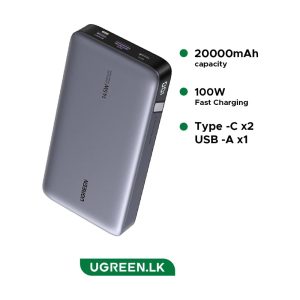
Universal USB-C charging also makes power banks far more useful during power cuts. A power bank with USB PD output can now charge a laptop as well as a phone. For laptops, look for at least 45W output, ideally 65W to 100W; the UGREEN Nexode 20,000mAh 100W power bank at Rs 19,000 can charge most USB-C laptops at full speed. Our power bank guide compares capacities and outputs.
USB-C is also about data and displays
The same port that charges a laptop can also carry video to a monitor and data to fast drives. Many USB-C ports support DisplayPort video, and USB4 and Thunderbolt ports carry 40 gigabits per second or more, enough to run two high-resolution monitors and a fast SSD through a single cable. That is what makes one-cable desks possible: plug the laptop into a dock or a monitor with a USB-C input, and it charges, connects to the screen, network and keyboard in one go. The MSI Modern MD272QXP monitor at Rs 101,500, for example, has a USB-C input that delivers 65W of power to the laptop while showing its screen. Not every USB-C port supports every feature, so look for the small symbols beside the port or check the laptop’s specifications; our dual monitor guide explains what to look for.
What about older devices?
Existing laptops with barrel chargers, older phones with micro-USB and older iPhones with Lightning will keep working with their original chargers. For a mixed household, a multi-port charger with one USB-A port, plus the right cable for each older device, bridges the gap. When replacing old devices, prefer ones that charge over USB-C, and recycle chargers you no longer need through an electronics collection point rather than household waste.
A simple travel and office kit
For most people, a single 65W multi-port GaN charger and two good USB-C cables cover a laptop, phone, tablet and earbuds; the UGREEN Uno 65W with two US286 cables comes to Rs 15,800. In an office, standardising on USB-C chargers at each desk means staff can plug in any company laptop or phone, and spare chargers in meeting rooms work for everyone. Our small office IT checklist includes standardising chargers and cables.
Safety and quality
Cheap uncertified chargers and cables can deliver unstable voltage, overheat or even damage devices. Buy from reputable brands with proper certification, avoid chargers that are unusually light or hot in use, and replace frayed cables. Do not use a damaged cable to charge a laptop, because higher power makes damaged cables more dangerous. Our guide to laptop battery care explains why stable, correct charging protects battery life.
Fewer chargers in the box
As more manufacturers sell phones, and now laptops, without chargers in the box, buyers should check what is included before comparing prices. A device sold without a charger may look cheaper, but if you do not already own a suitable USB-C charger, add its cost. For households with several devices, buying one good multi-port charger once is usually cheaper and tidier than collecting a different brick with each purchase, and it means less electronic waste over time.
-
 UGREEN
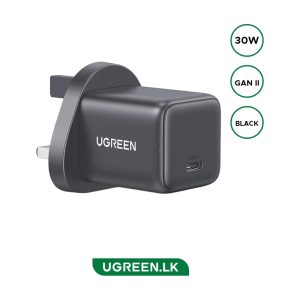
 30W USB-C GaN Fast Charger – UK Plug
Rs 5,200 Add to cart -
 UGREEN
 Uno 65W 3-Port GaN Charger – 2× USB-C, 1× USB-A, UK Plug
Rs 11,000 Add to cart -
 UGREEN
 Nexode 20000mAh 100W Power Bank – Laptop Fast Charging
Rs 19,000 Add to cart -
 UGREEN
 US286 USB-C to USB-C Cable – 1m, 60W
Rs 2,400 Add to cart
Frequently asked questions
Can I charge my laptop with my phone charger?
If both use USB-C, yes, but slowly if the phone charger is low wattage. A 65W charger suits most thin laptops.
Are all USB-C cables the same?
No. They differ in power rating (60W, 100W, 240W) and data speed. Laptops above 60W need a higher-rated cable.
Will new laptops come without chargers?
Manufacturers must offer a no-charger option in the EU. In Sri Lanka, check what is included when you buy.
Is it safe to use one charger for everything?
Yes, with a certified USB Power Delivery charger. Devices only draw the power they can safely accept.
Do gaming laptops charge over USB-C?
Many can, but usually more slowly than with their own high-wattage charger.

Eudora Technology is a Kandy-based team working on CCTV, networks, IT support, cloud and websites for homes and businesses across Sri Lanka.