Online Scams in Sri Lanka: How They Work and How to Protect Your Family
Reported online scams in Sri Lanka roughly doubled in 2025. The common tricks on WhatsApp, Facebook and SMS, the warning signs, and simple steps that protect your family.
A message arrives on WhatsApp from a friend’s number asking to borrow money urgently. A Facebook advert offers a well-known supermarket’s anniversary voucher. A recruiter on Telegram promises paid work from home liking videos. An SMS says your parcel is held and asks you to pay a small fee through a link. Each of these is a common scam in Sri Lanka, and they are rising quickly. According to the police, complaints about online scams roughly doubled in 2025. This guide explains the scams we see most often, the warning signs, how to protect older relatives and children, and what to do if something goes wrong.
Key points
- Sri Lanka CERT received more than 12,650 complaints about social media misuse and cyber incidents in 2025.
- The police reported about 3,100 online scam complaints in 2025, double the 1,528 recorded in 2024.
- Most scams rely on urgency, a too-good offer or a trusted name, not on technical hacking.
- Two-step verification on WhatsApp and Facebook, a pause before paying, and a call to a known number stop most of them.
How big the problem is
Official figures give a sense of scale. Sri Lanka CERT, the national computer emergency team, said it received more than 12,650 complaints relating to social media misuse and cybersecurity incidents in 2025, and warned in December 2025 about a rise in financial scams promoted through social media with fake promotions, rewards and prizes. The police spokesman reported that complaints about online scams doubled to about 3,100 in 2025, from 1,528 in 2024, with 314 suspects arrested, 146 of them foreign nationals.
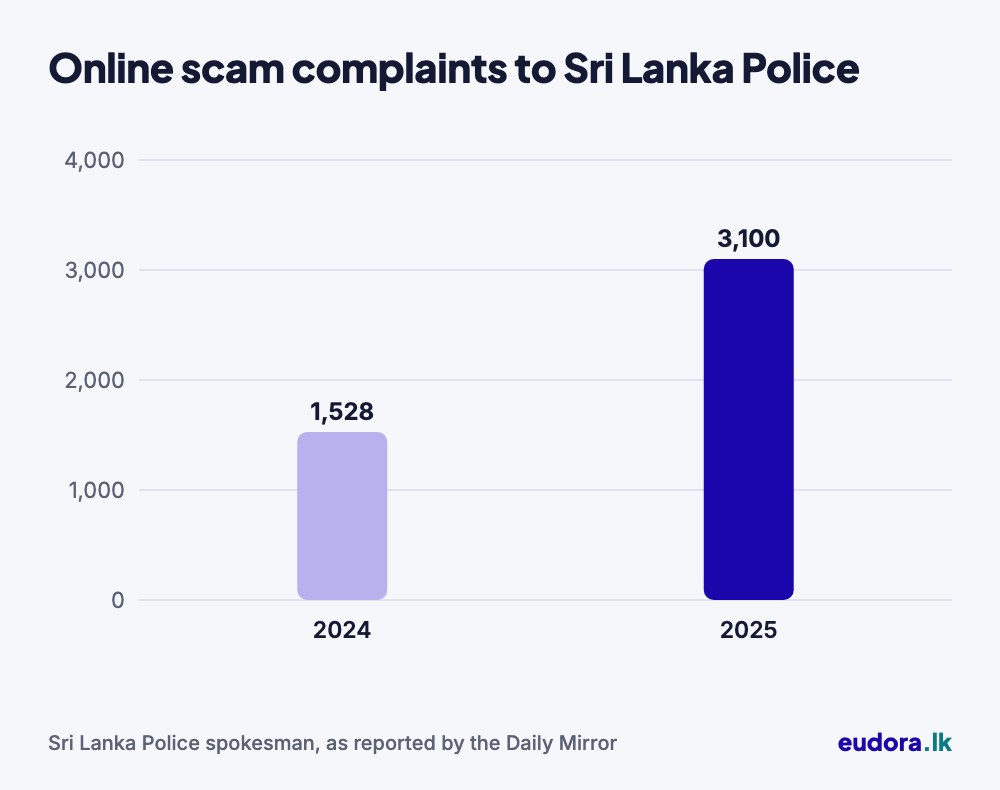
These numbers only include people who reported. Many victims, especially those who lost smaller amounts or feel embarrassed, never do. The real number of attempts is far higher: most Sri Lankan smartphone users will have received at least one scam message.
The scams we see most often
| Scam | How it works | Warning sign |
|---|---|---|
| Hijacked WhatsApp or Facebook account | A friend’s account is taken over and used to ask contacts for money or codes | Urgent request for money or a six-digit code |
| Fake promotions and prizes | Adverts or messages using a real company’s name offer gifts or vouchers | You must share, pay a fee or enter bank details |
| Fake job offers | Easy online tasks with small early payments, then demands for deposits | Paying to unlock earnings |
| Instant loan apps | Loans with no checks, then threats and harassment using your contacts | App wants access to contacts and photos |
| Investment and crypto schemes | Groups promising high returns, often with fake celebrity endorsements | Promises of risk-free or very high returns |
| Phishing links | SMS or email about parcels, banks or government services leading to fake sites | Link to an unfamiliar web address |
| Romance scams | An online relationship that leads to requests for money | Never able to meet or video call properly |
Fake government payment websites are a recurring problem; our post on the police warning about fake GovPay links shows how convincing they can look. AI tools now make fake messages and voices easier to produce, so a familiar name or even a familiar voice is no longer proof.
Why scams work: the three pressure points
Almost every scam pushes on one of three buttons. The first is urgency: an account will be closed today, a parcel will be returned, a friend is stuck at the hospital. Urgency stops you thinking and checking. The second is reward: a prize, a high-paying job, an investment that doubles your money. The third is trust: a message that appears to come from a bank, a government office, a well-known company or someone you know.
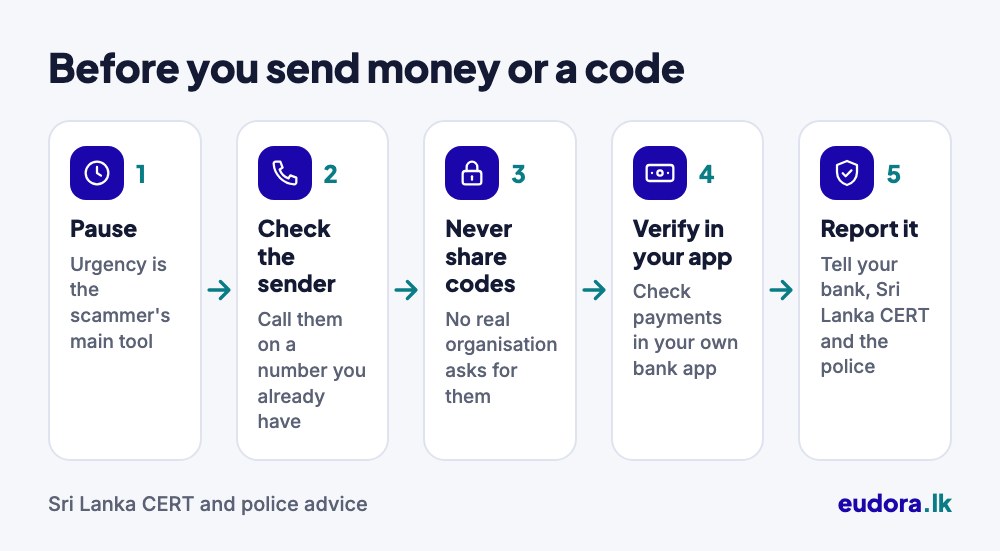
Knowing these patterns makes scams easier to spot. If a message combines a tight deadline with a request for money, a code or personal details, stop and check through a different channel. A genuine bank or office will still be there tomorrow, and a real friend will understand why you called back before sending money.
The one-time code trick
The single most common way accounts are stolen is by tricking people into sharing a one-time code. When someone tries to register your WhatsApp number on their phone, WhatsApp sends you a six-digit code by SMS. If you forward that code, they take over your account and start messaging your contacts. The same trick works for Facebook, email and bank accounts.
Rule: Never share a code you receive by SMS, email or app with anyone, including someone claiming to be a friend, your bank, a telecom company or the police. Real organisations never ask for it.
Protect your accounts in ten minutes
- Turn on two-step verification in WhatsApp. Settings, Account, Two-step verification. Set a PIN that a thief would also need.
- Turn on two-factor authentication on Facebook and email. Use an authenticator app rather than SMS where possible.
- Use different passwords for email, banking and social media. A password manager makes this easy.
- Hide your phone number and friend list from strangers on Facebook and limit who can add you to WhatsApp groups.
- Update phones and computers. Updates close security holes that malicious apps and links exploit.
- Install apps only from official stores, and check reviews and permissions, especially for loan and investment apps.
Protecting older relatives and children
Parents and grandparents are often targeted because they are trusting and less familiar with how apps work. Children are targeted through games, social media and fake prizes. A short conversation helps more than any software.
- Agree a family rule: anyone asking for money by message must be called on their usual number before anything is sent.
- Agree a simple code word for genuine emergencies.
- Show older relatives what a one-time code message looks like and that they must never share it.
- Set up WhatsApp two-step verification on their phones yourself.
- For children, use the parental controls in Google Family Link or Apple Screen Time, and talk about not sharing photos or personal details with strangers.
Does antivirus help?
Most scams trick people rather than computers, so no software catches everything. Good security software still helps in several ways: it blocks known phishing sites, warns about malicious downloads and apps, and on some products checks links in messages. On Windows, the built-in Microsoft Defender gives basic protection; paid suites add web protection, banking protection and coverage for phones.
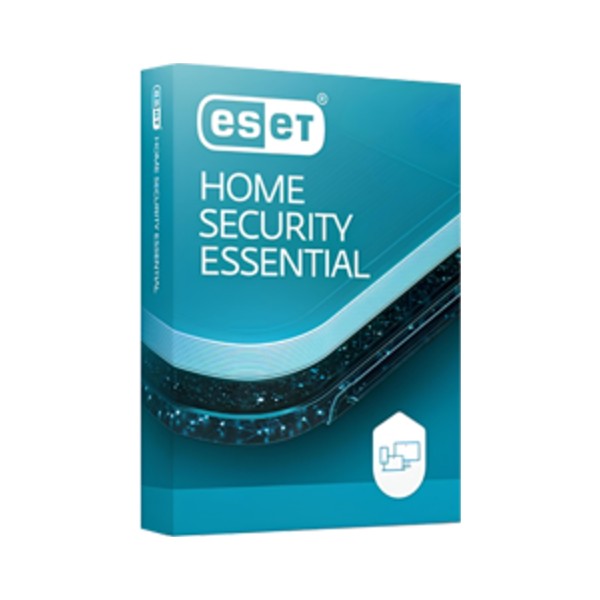
For a family, a five-device licence often covers parents’ laptops and phones. ESET HOME Security Essential for five devices costs Rs 8,500 a year, about Rs 1,700 per device. Our comparison of ESET, Kaspersky and Windows Security explains the differences.



Your home network matters too. A router with an old default password lets intruders change settings and redirect you to fake sites; our home Wi-Fi router checklist covers the simple fixes.
For small businesses
Shops and small businesses face the same scams plus some of their own: fake payment confirmations, supplier impersonation asking you to change bank details, and fake orders with cheques or transfers that later bounce. Always confirm payments in your own bank app, never from a screenshot, and verify any change of bank details by calling a known number. Our cybersecurity services include a staff phishing awareness session that covers these tricks with local examples.
Online shopping brings its own risks. Fake pages on Facebook and Instagram sell phones, electronics and clothes at prices that are hard to believe, take payment by bank transfer and never deliver. Before buying from a new seller, check how long the page has existed, look for real reviews outside the page itself, and prefer cash on delivery or established shops with a physical address and a returns policy.
If you have been scammed
- Call your bank immediately using the number on your card. Ask them to block the card or stop the transfer. Speed matters.
- Secure your accounts. Change passwords from a safe device, turn on two-step verification, and log out other sessions.
- Warn your contacts if your WhatsApp or Facebook was taken over, so they ignore requests from it.
- Report it. Report to Sri Lanka CERT and to the police, keeping screenshots, phone numbers, account numbers and dates.
- Watch for follow-up scams. Fake “recovery” services that promise to get your money back for a fee are scams too.
If a computer or phone may be infected after clicking a link, our IT support team can check it, remove malware and help secure your accounts.
Frequently asked questions
How can I tell if a WhatsApp message from a friend is fake?
Be suspicious of any urgent request for money or a code, even from a known number. Call the person on their usual number or ask a question only they would know before doing anything.
Are Facebook giveaways from big companies real?
Some are, but many are fake pages copying real brands. Check the page’s age, follower count and verified badge, and never pay a fee or give bank details to claim a prize.
Can my bank recover money sent to a scammer?
Sometimes, if you report it very quickly before the money is withdrawn. Delays make recovery much less likely, so call your bank immediately.
Is it safe to use instant loan apps?
Be very careful. Many unlicensed loan apps harvest contacts and photos and use them to harass borrowers. Use licensed banks and finance companies instead.
Where do I report an online scam in Sri Lanka?
Report to Sri Lanka CERT through its website and to the police, and inform your bank if money was involved. Keep screenshots and transaction details as evidence.

Eudora Technology is a Kandy-based team working on CCTV, networks, IT support, cloud and websites for homes and businesses across Sri Lanka.