AI CCTV Explained: Human and Vehicle Detection That Cuts False Alarms
Smart CCTV can tell people and vehicles from cats, leaves and rain. How AI detection works, where it helps, its limits, and what it costs to add in 2026.
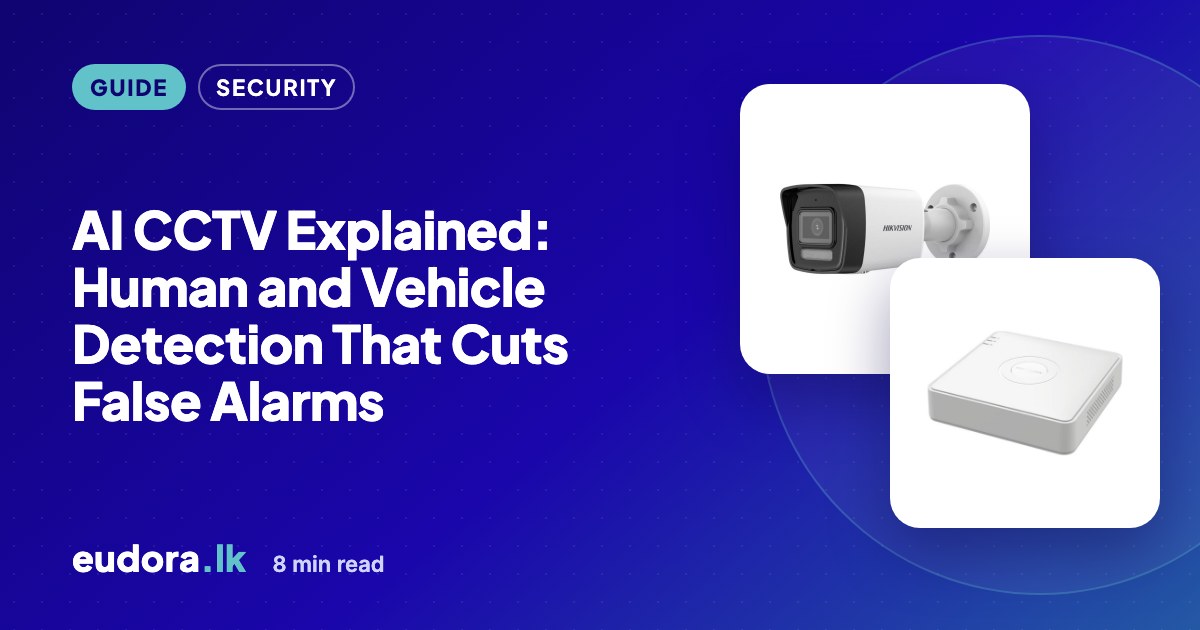
Anyone who has set up motion alerts on an older CCTV system knows the problem. The phone buzzes all night: a cat on the wall, coconut fronds moving in the wind, headlights sweeping across the gate, heavy monsoon rain. After a week most people turn the alerts off, and the cameras go back to being a recorder you only check after something has happened. AI detection changes that. Modern recorders and cameras can recognise the shape of a person or a vehicle and ignore everything else. This guide explains how it works, where it genuinely helps, what it cannot do, and how much more it costs.
Key points
- Basic motion detection reacts to any change in the picture. AI detection looks for the shape of a person or vehicle, so far fewer alerts are false.
- Hikvision calls its system AcuSense; EZVIZ calls it human shape or smart detection. Both work in the camera or the recorder.
- An AcuSense 4-channel DVR costs Rs 10,100 more than a standard Turbo HD DVR in our catalogue.
- Good results depend on camera placement, lighting at night and carefully drawn detection zones.
Motion detection versus AI detection
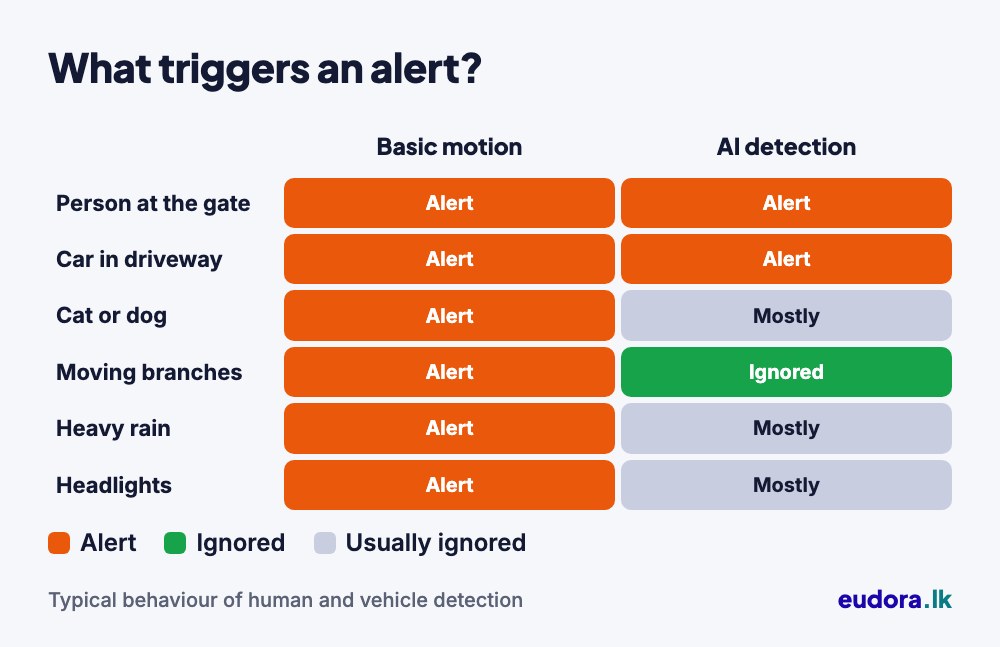
Traditional motion detection compares each video frame with the one before. If enough pixels change, it triggers. It has no idea what changed. Shadows moving as the sun sets, insects near the infrared lights at night, rain streaks and swaying plants all look like motion.
AI detection uses a trained model, usually running on a small processor inside the camera or the recorder, to classify what it sees. It has learned what people and vehicles look like from many angles and in different light. When something moves, it first asks whether that something is a person or a vehicle, and only then raises an alert. Animals, plants and weather are filtered out most of the time.
| Trigger | Basic motion detection | AI human and vehicle detection |
|---|---|---|
| Person at the gate | Alert | Alert |
| Car entering the driveway | Alert | Alert |
| Cat or dog in the garden | Alert | Usually ignored |
| Branches moving in wind | Alert | Ignored |
| Heavy rain or insects near the lens | Alert | Usually ignored |
| Headlights or shadows | Alert | Usually ignored |
Where the AI runs: camera or recorder
There are two common designs. In wired HD systems such as Hikvision Turbo HD, the analysis usually happens in an AcuSense recorder, so ordinary analogue cameras gain smart alerts when connected to it. In IP systems and Wi-Fi cameras, the analysis often runs in the camera itself, which then tells the recorder or the phone app what it saw.
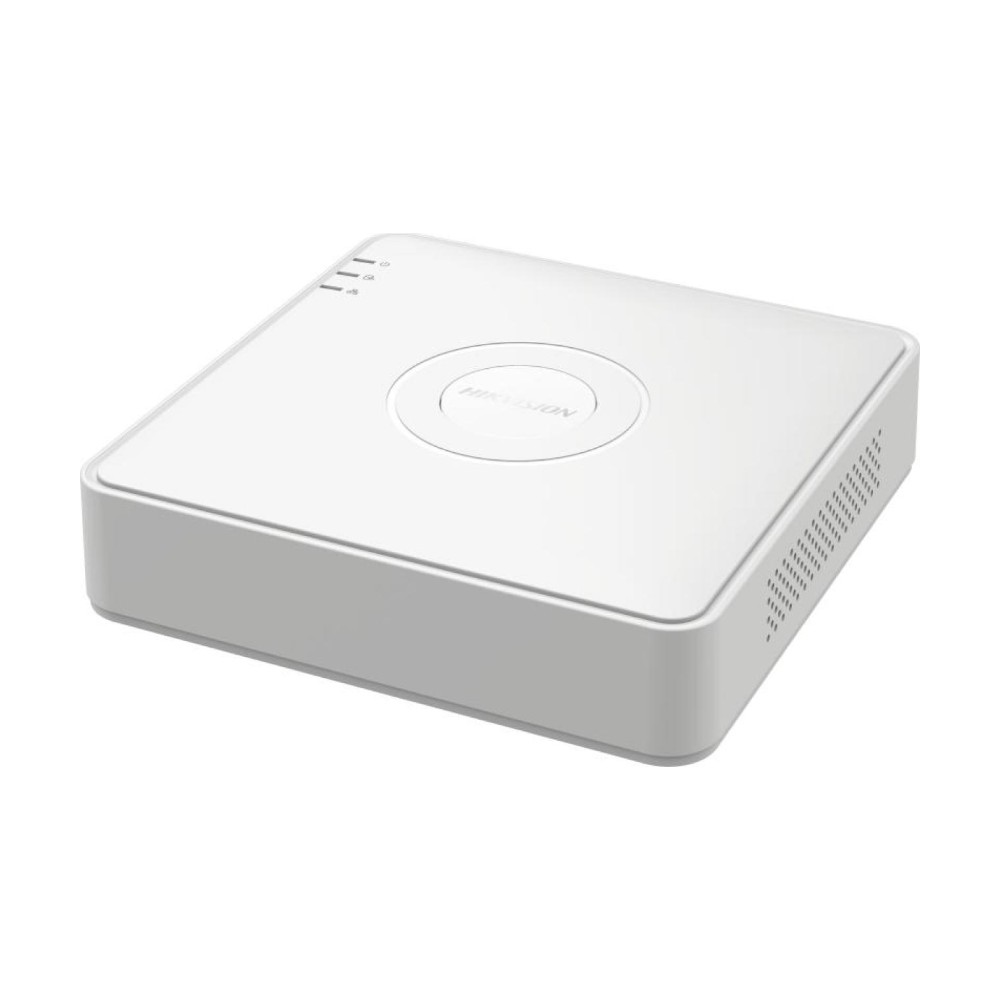
For a home or shop upgrading an existing wired system, the recorder route is attractive: you keep the cameras and cables and replace only the DVR. The 4-channel AcuSense DVR costs Rs 24,000, against Rs 13,900 for a standard Turbo HD model. For new installations, our complete kits include AcuSense recorders on the ColorVu and 3K models.
What AI detection is good for
- Phone alerts you will actually read. With fewer false alarms, a notification at 2 a.m. is worth looking at.
- Faster searching. Recorders can filter playback to show only clips with people or vehicles, which turns an hour of footage into a few minutes.
- Perimeter lines and zones. You can draw a line across the gate or a zone over the driveway and only be alerted when a person crosses it.
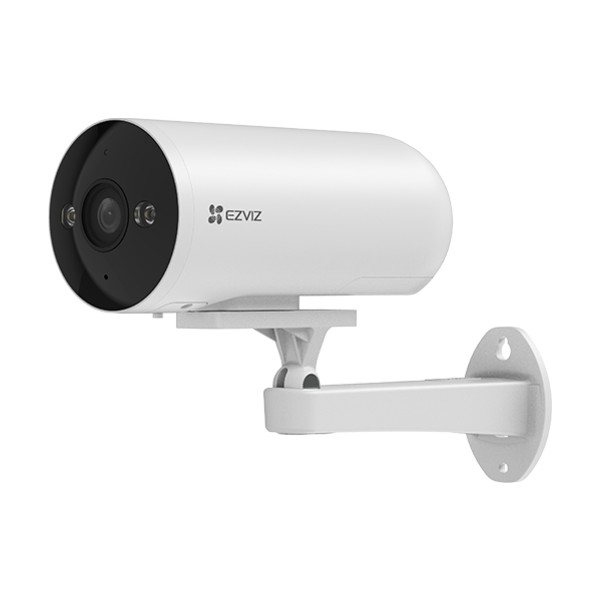
- Deterrence. Some cameras, such as the EZVIZ H5 with active defence, can sound a siren or flash a light when a person is detected.
- Shops after hours. Alerts for people inside the shop after closing time, without alarms every time the stock room fan moves a poster.
The limits you should know
AI detection is a large improvement, not a guarantee. Understanding its limits helps you set it up properly.
Works well
- People and cars at normal distances in reasonable light
- Filtering animals, plants and weather
- Searching recordings by event type
Struggles with
- Very small figures far from the camera
- Dark scenes with weak infrared
- People partly hidden behind walls or vehicles
- Cameras aimed into strong backlight or headlights
Placement matters more than anything. A camera mounted too high and too far away sees people as a few dozen pixels, which is hard to classify. Our guide on where to place CCTV cameras covers heights and angles, and resolution matters too: a 3K or 5MP camera gives the AI more detail to work with than a 2MP camera at the same distance, as our resolution guide explains.
Night time is where it matters most
Most real incidents happen at night, which is also when detection is hardest. The type of night vision affects accuracy.
| Night vision type | What the camera sees | Effect on detection |
|---|---|---|
| Infrared (IR) | Black and white image lit by invisible IR | Good within range; insects attracted to IR can cause false motion |
| ColorVu (full colour) | Colour image using a soft white light and a sensitive sensor | More detail, helpful for identifying clothing and vehicle colour |
| Smart Hybrid Light | IR normally, switching to white light when a person is detected | Combines discreet IR with colour detail when it matters |
Our article on night vision types goes into more detail. For gates and driveways, a Smart Hybrid Light camera such as the Hikvision DS-2CD1023G2-LIU, which combines AcuSense with white light up to 30 metres, is a practical choice.
Setting up detection for fewer false alerts
- Turn on human and vehicle filtering in the recorder or app, rather than general motion.
- Draw detection zones that cover the gate, door and driveway, and exclude the road, trees and neighbours’ property.
- Use line crossing for gates and boundary walls, set to trigger in one direction only if possible.
- Set a schedule so phone alerts come at night or when the shop is closed, while recording continues all day.
- Test it by walking through each zone in daylight and at night, then adjust sensitivity.
- Clean lenses and remove cobwebs every few months, especially before the monsoon. Spiders love warm IR cameras.
Tip: Masking out the public road is also good practice for privacy. Point cameras at your own property and avoid recording neighbours’ windows and gardens.
Wi-Fi cameras with smart detection
Smart detection is not limited to wired systems. Most current EZVIZ Wi-Fi cameras include human shape detection, and the more capable indoor models can follow a person as they move across the room. For a flat, a small office or an extra camera covering a back door, a Wi-Fi camera with smart detection and a memory card is a simple way to get useful alerts without running cables.
The trade-offs are the usual ones for Wi-Fi cameras: they depend on a good signal and on power at the camera, and recordings sit on a small memory card unless you add a recorder or cloud plan. Our comparison of Wi-Fi cameras and wired CCTV sets out when each makes sense.
Privacy and the law
Smarter cameras collect more useful information about people, so it is worth being careful about where they point. For businesses, CCTV footage of customers and staff is personal data under Sri Lanka’s Personal Data Protection Act, and our post on the PDPA deadline explains what businesses need to prepare. In practice that means clear signs that CCTV is in use, cameras pointed at your own premises, sensible retention periods and limited access to recordings.
At home, the same courtesy applies to neighbours. Use the privacy masking feature that most recorders offer to black out windows and gardens next door.
What it costs
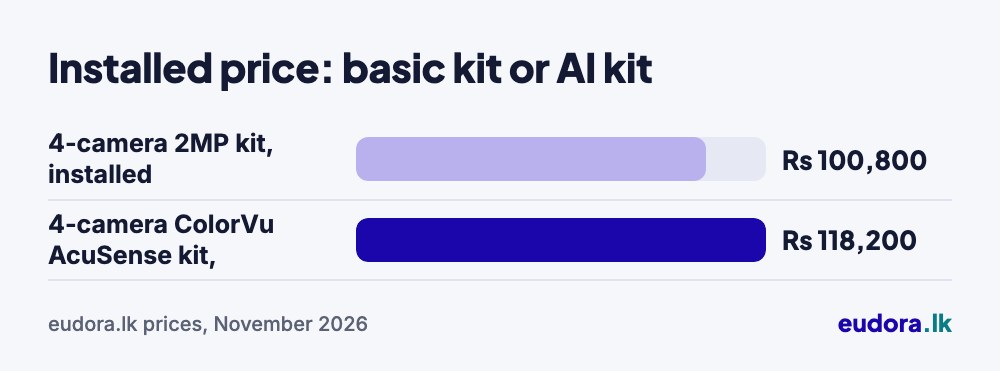
AI detection has become standard on mid-range equipment rather than a premium extra. In our catalogue, a 4-camera ColorVu kit with an AcuSense recorder costs Rs 96,700, which is Rs 17,400 more than our basic 4-camera 2MP kit. Installed with four wired cameras and recorder setup, the ColorVu kit comes to Rs 118,200, against Rs 100,800 for the basic kit.
-
 KitHikvision
4-Camera ColorVu Full-Colour Night CCTV Kit (Hikvision AcuSense)
Rs 96,700 Add to cart -
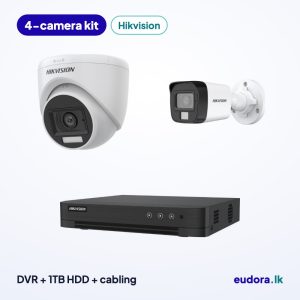 KitHikvision
4-Camera 3K (5MP) HD CCTV Kit (Hikvision AcuSense)
Rs 113,100 Add to cart -
 Hikvision
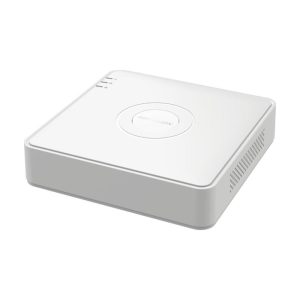
 iDS-7108HQHI-M1/T 8-Channel AcuSense DVR
Rs 35,400 Add to cart -
 EZVIZ
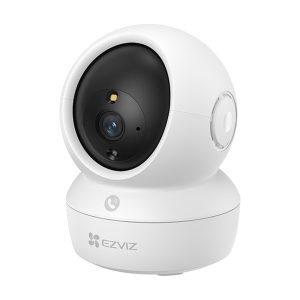
EZVIZ H6c Pro 3K Pan & Tilt Indoor Wi-Fi Camera
Rs 11,300 Add to cart
Indoor Wi-Fi cameras with human detection are inexpensive: the EZVIZ H6c Pro 3K, which also tracks a person as they move, costs Rs 11,300. For larger sites, 8 and 16-channel AcuSense recorders are available. If you are not sure which suits your property, our CCTV installation team offers a free site survey around Kandy, and our home CCTV guide explains the other choices.
Smart alerts do not replace good basics. A camera that is well placed, protected from lightning and power surges and recording to a proper surveillance hard drive is still the foundation. AI detection simply makes sure you notice when something happens.
Frequently asked questions
Can I add AI detection to my existing CCTV cameras?
Often, yes. For Hikvision Turbo HD systems, replacing the DVR with an AcuSense model adds human and vehicle detection to existing analogue cameras. Check compatibility first.
Does AI CCTV recognise faces?
The cameras in this guide detect people and vehicles, not individual identities. Face recognition is a separate, more expensive feature with privacy implications.
Will animals never trigger alerts?
They will occasionally, especially large dogs or animals seen at odd angles, but far less often than with basic motion detection.
Does AI detection need the internet?
No. The analysis runs in the camera or recorder. The internet is only needed to send alerts and view footage on your phone.
Is AI detection worth it for a small shop?
Usually yes. It makes after-hours alerts useful and saves time when searching footage after an incident.

Eudora Technology is a Kandy-based team working on CCTV, networks, IT support, cloud and websites for homes and businesses across Sri Lanka.