Prompting vs RAG vs Fine-Tuning: How to Make AI Know Your Business
Three ways to make an AI model useful with your own information: better prompts, RAG and fine-tuning. What each costs, the effort involved and when each wins.

A general AI model knows a great deal about the world and nothing about your price list, your returns policy, last week’s product update or how your team writes to customers. To make it useful inside a business, you have to give it that knowledge. There are three main ways to do it: put the information in the prompt, retrieve the right information at the moment of the question (retrieval-augmented generation, or RAG), or train the model further on your examples (fine-tuning). Vendors and consultants often jump straight to the most complicated option. This guide explains what each one does, what it costs in money and effort, and the order in which most businesses should try them.
The problem: general models do not know your business
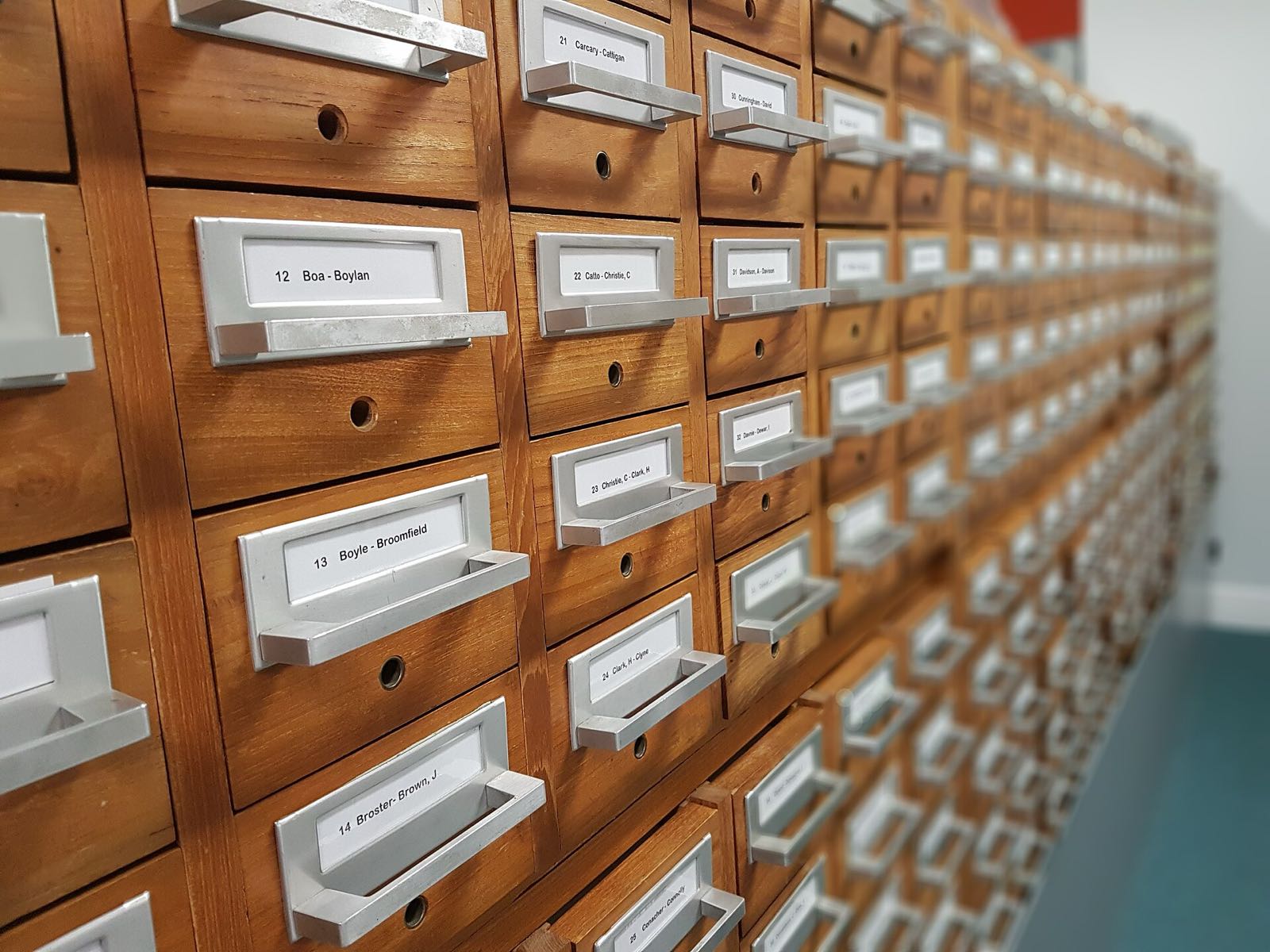
Large language models learn from a snapshot of public data up to a cut-off date. They do not see your intranet, your CRM or your contracts, and they do not learn from your conversations on business plans. Ask a general model about your warranty terms and it will either say it does not know or, worse, produce something plausible but wrong. The fix is to supply the knowledge, and the three approaches differ in when and how they do it.
| Approach | When the knowledge is supplied | What changes |
|---|---|---|
| Prompting | In every request, written by you | Nothing in the model; only the input |
| RAG | In every request, retrieved automatically | Nothing in the model; a search system feeds it |
| Fine-tuning | Once, during extra training | The model’s weights, and so its default behaviour |
Option 1: prompting and context
Prompting means writing clear instructions, giving the model a role, adding a few examples of good answers and including the reference text it needs. Vendors’ own guides, such as Anthropic’s prompt engineering documentation, stress the same basics: be specific, show examples, give the model room to reason, and say what to do when it does not know.
Context windows have grown dramatically. Leading models in 2026 accept hundreds of thousands of tokens, and some far more, which is enough for a full policy manual or a long contract. For a small knowledge base, simply including the documents in the prompt can work well, especially with prompt caching, which several API providers offer to cut the cost of repeating the same long context.
- Write the instructions as you would for a new employee.
- Add three to five examples of ideal answers.
- Paste in the relevant policy or product sheet.
- Tell the model to say ‘I don’t know’ rather than guess.
Option 2: retrieval-augmented generation (RAG)
Retrieval-augmented generation, described in a 2020 research paper by Lewis and colleagues, combines a search system with a language model. Your documents are split into passages and indexed, usually with embeddings that capture meaning. When a question arrives, the system retrieves the most relevant passages and gives them to the model along with the question. The model answers from those passages and can cite them.
- Ingest: collect documents, clean them and split them into passages.
- Index: create embeddings and store them in a vector database or search index.
- Retrieve: for each question, find the best matching passages, often combining keyword and semantic search.
- Generate: the model answers using the passages and cites sources.
- Evaluate: test answers against known questions and fix gaps in content or retrieval.

RAG’s strengths are freshness and traceability: update a document and the next answer reflects it, and every answer can point to its source. Its weakness is that answers are only as good as retrieval. Outdated, duplicated or badly formatted documents produce poor answers. RAG also needs access control: the system must only retrieve documents the asking user is allowed to see, a risk the OWASP Top 10 for LLM applications highlights under sensitive information disclosure.
Option 3: fine-tuning
Fine-tuning trains an existing model further on hundreds or thousands of example inputs and ideal outputs. The model learns patterns: a house writing style, a strict output format, a classification scheme, or a specialised task done consistently. Several API providers offer fine-tuning of their smaller models, and open-weight models can be fine-tuned freely, as covered in our comparison of practical AI options.
It is a poor way to teach facts. Facts learned in training cannot be cited, are hard to update and may be blended with other knowledge. If your prices change monthly, a fine-tuned model will be out of date by next month. Fine-tuning also needs good training data, an evaluation process and retraining when the base model is retired.
Side-by-side comparison
| Factor | Prompting | RAG | Fine-tuning |
|---|---|---|---|
| Best for | Instructions, small reference sets | Answering from many documents | Style, format, narrow repeated tasks |
| Keeps knowledge current | Yes, edit the prompt | Yes, update documents | No, retrain needed |
| Can cite sources | If you include them | Yes | No |
| Set-up effort | Hours | Days to weeks | Weeks |
| Ongoing effort | Low | Content upkeep and evaluation | Data curation and retraining |
| Cost to start | Very low | Low to medium | Medium |
| Risk of made-up answers | Medium | Lower, if retrieval is good | Medium |
Common mistakes
- Fine-tuning to add facts. Use RAG or the prompt instead.
- Skipping evaluation. Without a set of test questions with known answers, you cannot tell whether a change helped.
- Indexing everything. Old drafts and duplicates confuse retrieval. Curate first.
- Ignoring permissions. A RAG system that retrieves HR files for everyone is a data breach waiting to happen.
- Over-engineering. A long prompt with a few documents often beats a complex pipeline for small collections.
Data protection also applies. If documents contain personal data, the same rules on purpose, access and retention apply when AI reads them; see data protection basics.
A sensible order of attack
| Step | Do this | Move on when |
|---|---|---|
| 1 | Write a strong prompt with examples and reference text | Answers are mostly right but knowledge is too large to paste |
| 2 | Add RAG over a curated document set | Retrieval is good but tone or format still varies |
| 3 | Fine-tune for style or format on a measured gap | You have hundreds of good examples and a test set |

Once the knowledge layer works, you can let AI take actions too; our guide to AI agents for small business covers that step. Our IT services team builds RAG assistants over company documents with access control and evaluation from the start.
Frequently asked questions
What does RAG stand for?
Retrieval-augmented generation: the system retrieves relevant passages from your documents and gives them to the AI model to answer from.
Is fine-tuning better than RAG?
They solve different problems. RAG supplies current knowledge with sources; fine-tuning shapes behaviour and format. Many systems use both.
Do we need a vector database?
Not always. Small collections can fit in the prompt, and many search tools now include semantic search. Vector databases help at larger scale.
How many documents can RAG handle?
From a handful to millions. Quality depends more on how clean and well organised the documents are than on the number.
Can RAG stop AI from making things up?
It reduces it, especially if the model is told to answer only from the retrieved text and say when it cannot. Evaluation is still needed.
Want an AI assistant that answers from your own documents? Get in touch with Eudora Technology to talk about your project.
Sources
This article was originally published on ieudora.com.

Eudora Technology is a Kandy-based team working on CCTV, networks, IT support, cloud and websites for homes and businesses across Sri Lanka.